“Priscilla” is a film following the real-life story of Priscilla Presley, former wife of the King of Rock and Roll, Elvis Presley. Her relationship with Elvis is (controversially) known to be an instance of domestic and psychological abuse, which is portrayed in the film. While it does involve darker themes, and the overall moral of these genre films is “you don’t leave unscathed,” I think her story showcases examples of the stages within Schmidt’s Heroine’s Journey. I found it interesting that a real relationship--one that could not be written around a story--still follows the cycle.
 |
| Priscilla at the age she meets Elvis (movie) |
The film begins in Germany, where Priscilla’s father and Elvis are both stationed. Priscilla is approached in a diner and invited to a party that Elvis will attend. Despite her parent’s concerns, she goes to the party and has a moment to chat with Elvis alone. They take a liking to each other and their “relationship” begins. The smooth start to their relationship represents the first stage--the “illusion of the perfect world.”
“Betrayal” comes as Elvis’ service is completed and he is cleared to return to America. The couple understands that they have to separate. Priscilla’s parents begin to vocalize their concerns about their relationship, as Priscilla is a high schooler, while Elvis is in his 20s.
After Elvis’ departure, many months go by and the two communicate less and less. After a short time skip, Priscilla is set to graduate high school in a year. This is when Elvis calls Priscilla and invites her to fly out and live with him in America. Elvis convinces her parents to give her permission and Priscilla is set to move and finish her education in the States. This segment is a good example of the preparation for the journey. A new opportunity has been presented to Priscilla, which she takes, and she is about to “cross a threshold” and enter a completely different way of life.
:max_bytes(150000):strip_icc()/Priscilla-102323-02-c46410183a5e49dd96e20fd33a2ff15a.jpg)
Priscilla’s move to America represents “Priscilla’s” deviation from the complete, original cycle of the Heroine’s Journey. As the film showcases the progression of an abusive relationship, the “harder” stages between “eye of the storm” and “death” appear multiple times, taking up the majority of the film and their relationship.
The first iteration was the honeymoon phase when Priscilla first arrived in America. After years of being apart, they spend most of their time together, Priscilla meets Elvis’ friends and family, and she integrates well into her new life. The first “death” shows Elvis slowly appearing bored of her, not wanting to be around her as much and criticizing her more. As Elvis asks Priscilla to wear darker colors and heavier makeup, we see a version of masculinity as portrayed in the Heroine’s Journey. The Heroine’s Journey focuses on the heroine’s transition from taking on more “masculine” tendencies before returning to and embracing feministic ways. A similar concept is portrayed throughout “Priscilla,” but, rather than adapting masculine ways, Priscilla is seen internalizing Elvis’ commands and separating herself from the softer, more feminine aesthetic she was introduced with.
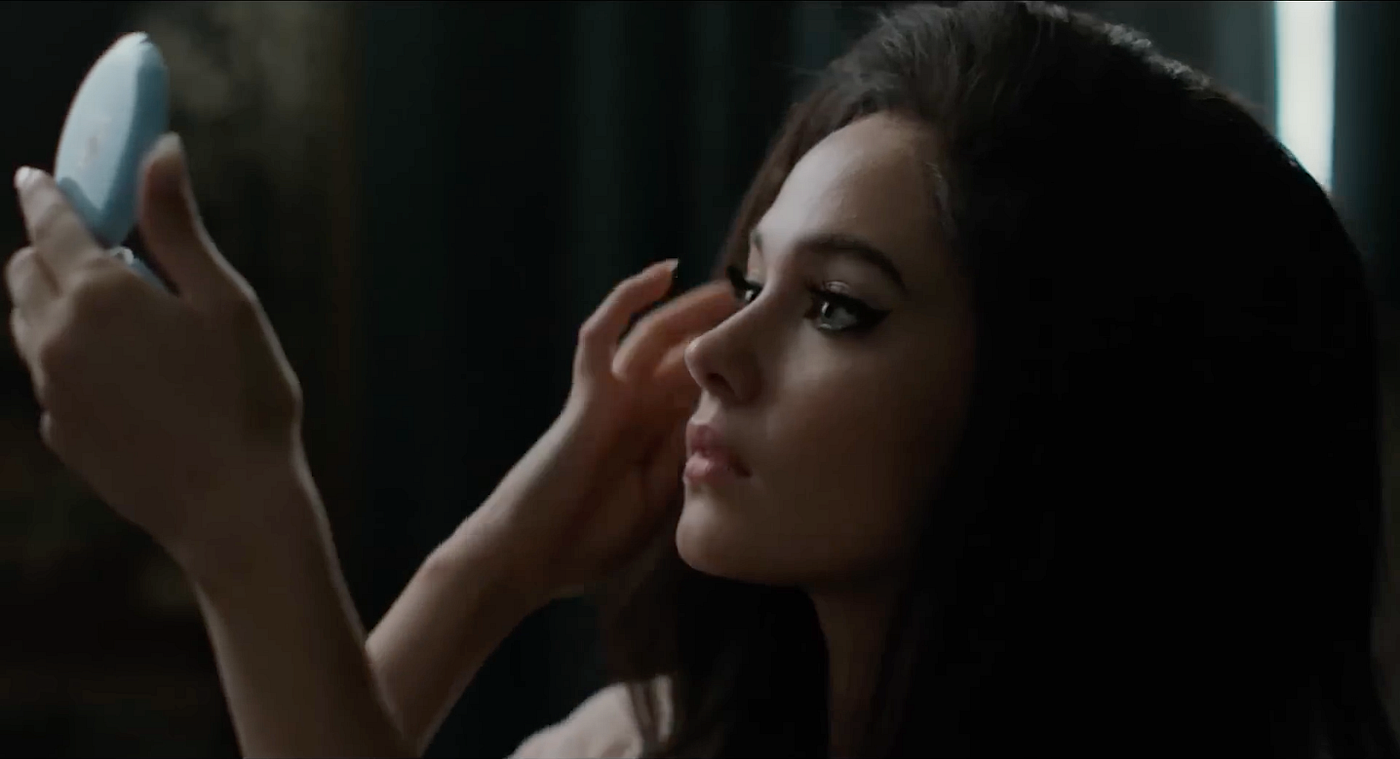
After Priscilla’s first transformation, they get along well for some time and celebrate as Elvis’ career is at its peak. However, his great success leads to the second death of their relationship. Elvis is constantly away creating new music, shooting movies, and simply becoming a major celebrity. On one of his trips, Priscilla begins to suspect that he is cheating on her. When she goes to confront him, he becomes defensive and sends her away.
In each play-through of the “death” and “rebirth,” Priscilla rebirths less bubbly and less trusting of Elvis. In the film, we’re led to see how the mental strain from the relationship is helping her mature, extenuating her young age at the beginning of the movie. After the argument about his infidelity, we see a string of instances where Elvis is more “obviously” abusive. When he asks Priscilla about his new song, she says she doesn’t like it. In response, he throws a chair at her.
Elvis returns from a work trip and asks Priscilla to marry him. Shortly after they marry, Priscilla gets pregnant which Elvis responds negatively to, asking her to take a break from the marriage. We can see another cycle begin when their child, Lisa, is born. Elvis tries to be a good father but his career and other issues hinted at throughout the film--such as progressive drug abuse, and returning accusations of his affair--strain his attempts at building familial relationships. As their relationship continues and becomes more complex, the cycles become more short-lived, constantly bouncing between the good and bad.

Priscilla continues to experience “rebirths” where she becomes more and more detached, each time her mentality becomes more conclusive. In the final reiteration of the cycle, it’s shown that she is extremely dismissive of Elvis’ actions and well-being--a stark difference from her character in early scenes. Elvis’ bedside tables have pill bottles and drugs scatted across, and it’s hinted that he’s been having no-so-secret affairs with multiple women. Elvis tries to make a move on Priscilla, but she simply responds by telling him she is getting a divorce.
A key factor in what separates “Priscilla” from other films is the lack of supporting characters for Priscilla. She was left alone for much of her life--being stripped away from her family to focus on her relationship, then having to depend on Elvis for affection. The taking away of a “support” character in her rebirths could be why she was forced to experience so many reiterations of “death and rebirth.” She had to understand her situation and find internal courage before leaving her relationship.
Pricsilla’s perfect world began with Elvis, while her return to a perfect world was the opposite--a world where she is free from him. While the film “Priscilla” does not exactly follow the Heroine’s Journey timeline, it gives great examples of each individual stage and a fantastic representation of the final “rise above” for the heroine.


